
 Emily White
 There is a certain kind of man who never seems to have people over, rarely mentions close friends, and appears to move through life in a largely self-contained way. It is easy to assume something has gone wrong for him. But psychology tells a more interesting story. For many of these men, the quiet is deliberate, the distance is protective, and the inner world more than compensates for what the social one lacks. These seven traits, drawn from research on personality, attachment, and solitude, explain why some men end up living this way and what it actually reveals about who they are.
Trait 1: They are deeply comfortable being alone

These men find it really restorative, where others become impatient in silence. Their solitude is not a kind of suffering; it is the state of mind when they can think the most clearly and feel the most at home, and when they are allowed to follow their interests without distractions. There is constant research on introversion, which states that a reduced need of external stimulation is a permanent personality factor, not a trauma that needs to be cured or a stage that must be outgrown.
Trait 2: They value quality over quantity in relationships

These are men who do not amass friends. Once they invest in a relationship, the bond is generally deeper and more authentic than the majority. They are not very patient of small talk and superficial socialising and want to have a real conversation. The presence of one or two individuals with whom they share a genuine trust is far more important to them than having a wide and extensive social network that never quite reaches a level of intimacy.
Trait 3: They are intensely independent

They do not like asking someone to assist them. These men are programmed to resolve their own issues, make their own choices, and survive hardship in their own way. Although this autonomy develops a sense of strength and ability, it may also be the thing that keeps intimacy on the periphery. Attachment research associates this trend with an avoidant style that silently opposes the interdependent relationship that true friendship demands.
Trait 4: They protect their household as a secret place

Home is not a socializing place for these men. It is the place where they have complete control over the environment, the speed, and the power. Giving a person access into that space is a gesture of actual trust, meaning that it is very infrequent and it is given to those that have earned it. What is an outsider might deem a closed door is often a neatly guarded perimeter around the only place they can consider to be themselves.
Trait 5: They have difficulty being vulnerable

Such men tend to show a well-constructed and competent facade and seldom allow anyone to peep under the carpet. The work of researcher Brene Brown has found the mental process of vulnerability to be the central process by which emotional proximity is formed. Without it, even the friendly relationships are likely to stagnate on the surface. In men who have been conditioned to see self-disclosure as a sign of weakness, such a pattern can easily become entrenched and sincerely hard to change.
Trait 6: They are very observant and rich internally
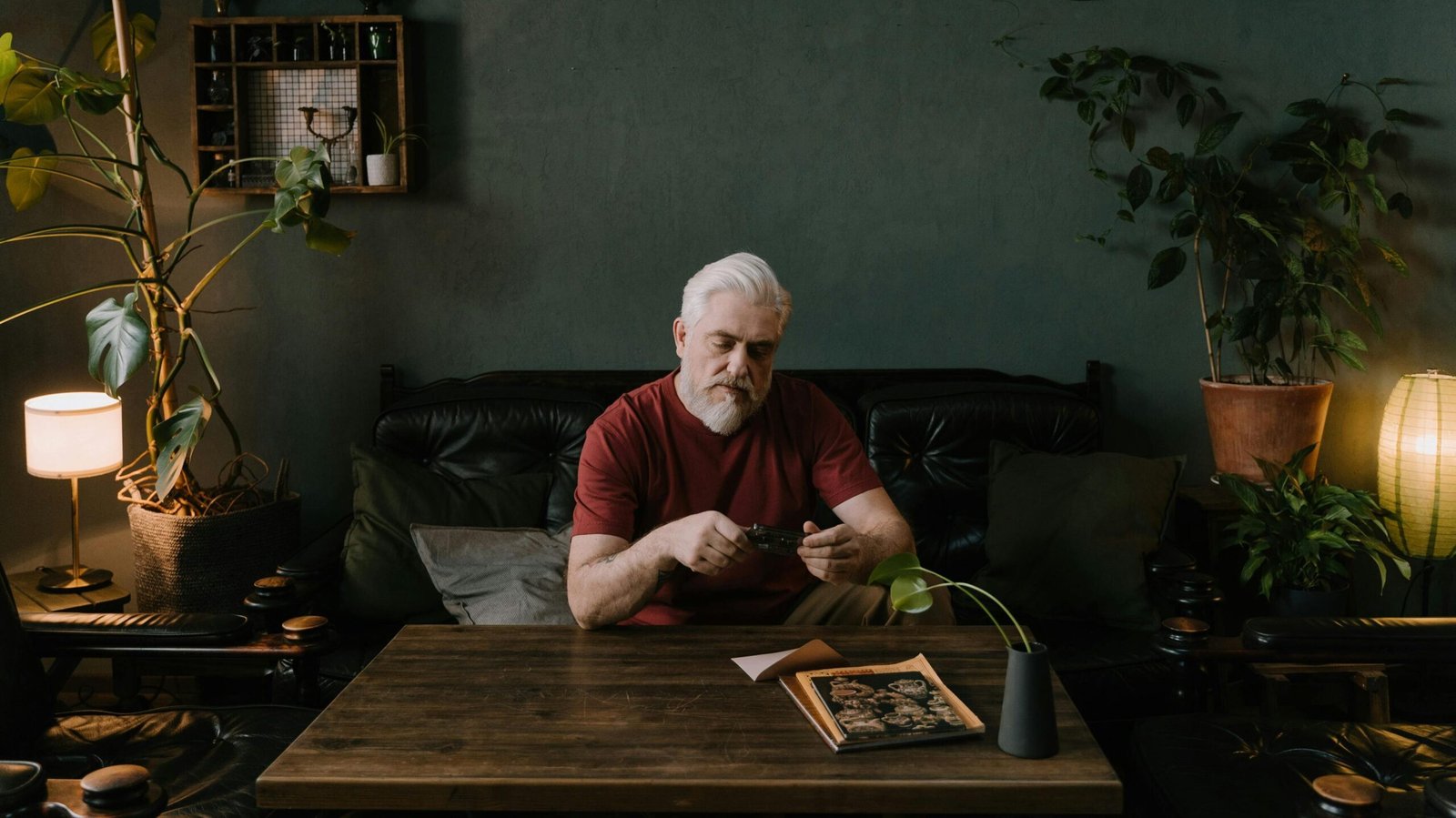
Time alone works to focus attention inward and outward with an abnormality of intensity. These men are the ones who see things others overlook, build a strong personal outlook by reading, thinking, or special hobbies and have a rich inner life which seldom finds full expression. Their quietness at social places is often confused with their lack of interest or arrogance, but the truth is that they are merely tuning to a different register altogether.
Trait 7: They follow structured routines with little room for spontaneity

A less noisy way of life is likely to create dailies that have been worn out. These men also tend to be immensely comforted by structure and predictability and therefore, unplanned social interaction feels disruptive and not warmly received. Gradually, what was initially liberating can become clogging and blocking the type of free, repetitive interaction that psychologists claim to be the real fabric of enduring friendship. Proximity and consistency are more important than most individuals think, and unless they are provided, even good intentions perish.